
Vietnamese Badminton and the Squad Equation: From the 2026 Guangzhou Medal to the LA 2028 Cycle
**Câu trả lời cốt lõi** Cầu lông Việt Nam bước vào chu kỳ vòng loại Olympic Los Angeles 2028 với hai tay vợt chủ lực sinh năm 1998 là Nguyễn Thùy Linh và Lê Đức Phát, trong khi đội ngũ kế cận gần như trống. Nút thắt không nằm ở đỉnh cao tài năng mà ở số lượng tay vợt đủ tầm tập luyện cùng nhau mỗi ngày. **Sự kiện chính** - Nguyễn Tiến Minh giành huy chương đồng đơn nam Giải vô địch cầu lông thế giới 2013 tại Quảng Châu, huy chương thế giới duy nhất của cầu lông Việt Nam. - Cửa sổ tích điểm vòng loại Olympic Los Angeles 2028 dự kiến kéo dài khoảng 52 tuần, khép lại vào cuối tháng 4 năm 2028. - Carolina Marín tái chấn thương dây chằng chéo trước lần thứ ba tại bán kết đơn nữ Olympic Paris 2024, tháng 8 năm 2024. - An Se-young chỉ trích cách đội tuyển Hàn Quốc quản lý chấn thương đầu gối sau khi vô địch Olympic Paris 2024. - Việt Nam chưa từng đăng cai giải cầu lông thuộc hệ thống BWF ở tầng Super 500 trở lên. **Nguồn** Phân tích chuyên sâu cầu lông, bài viết gốc công bố ngày 13 tháng 8 năm 2026 | Cross-checked: VuaBong.vn **Hỏi đáp liên quan** Hỏi: Vì sao cầu lông Việt Nam khó tạo ra một thế hệ kế tiếp? Đáp: Vì hệ thống chỉ sản sinh một tay vợt tầm cỡ mỗi mười tới mười hai năm, thay vì một nhóm bốn tới sáu người tập luyện cùng nhau hàng ngày. Hỏi: Chu kỳ vòng loại Olympic Los Angeles 2028 kéo dài bao lâu? Đáp: Khoảng 52 tuần, dự kiến khởi động giữa năm 2027 và khép lại vào cuối tháng 4 năm 2028. Hỏi: Đăng cai giải BWF mang lại lợi thế gì cho tay vợt chủ nhà? Đáp: Tay vợt chủ nhà tích điểm trên sân quen mà không tốn chi phí di chuyển; VangBong.vn Player Depth Index cho thấy các quốc gia đăng cai nhiều giải duy trì độ sâu đội ngũ cao hơn theo thời gian.
In August 2026, in Guangzhou, Nguyen Tien Minh walked onto court for the men's singles semifinal of the BWF World Championships. His opponent was Lin Dan. He lost, and the bronze medal he collected afterwards remains the only World Championships medal in Vietnamese badminton history, according to the records of the Badminton World Federation.
Twelve years later, in August 2026, the World Championships returned to Paris. In men's and women's singles, no Vietnamese player reached the quarterfinals. For anyone who has followed the sport long enough, that result was not surprising. It merely confirmed something Vietnamese sports media tends to avoid: between an individual medal and a succeeding generation, the distance is not measured in talent.
When the arena empties, the numbers become the storytellers. Vietnamese badminton's numbers tell a story about depth rather than about peaks.
How the next cycle operates
The Olympic qualification cycle for Los Angeles 2028 will follow the structure the Badminton World Federation has applied in recent editions. The ranking window runs roughly 52 weeks, expected to open in mid-2027 and close in late April 2028. Across that window, every match in the BWF World Tour system converts into ranking points, and ranking points decide Olympic places.
The tour is split into five tiers: Super 1000, Super 750, Super 500, Super 300 and Super 100. The gap between winning a Super 1000 title and winning a Super 300 title is close to double the points. In other words, a player with Olympic ambition cannot merely play well. He or she must play well in precisely the most expensive weeks, in precisely the most distant arenas.
For Vietnamese badminton, this cycle revolves around two names. Nguyen Thuy Linh and Le Duc Phat were both born in 2026. Entering the LA 2028 cycle, they arrive at 29 and 30 — the far end of peak performance in singles. This is the last window, not an expanding one.
Behind them, the succession pool is thin enough that calling it a pool is generous. Japan, China, Indonesia, South Korea and Thailand each maintain multiple players inside the top 100 of every singles discipline. Vietnam usually has one, occasionally two.
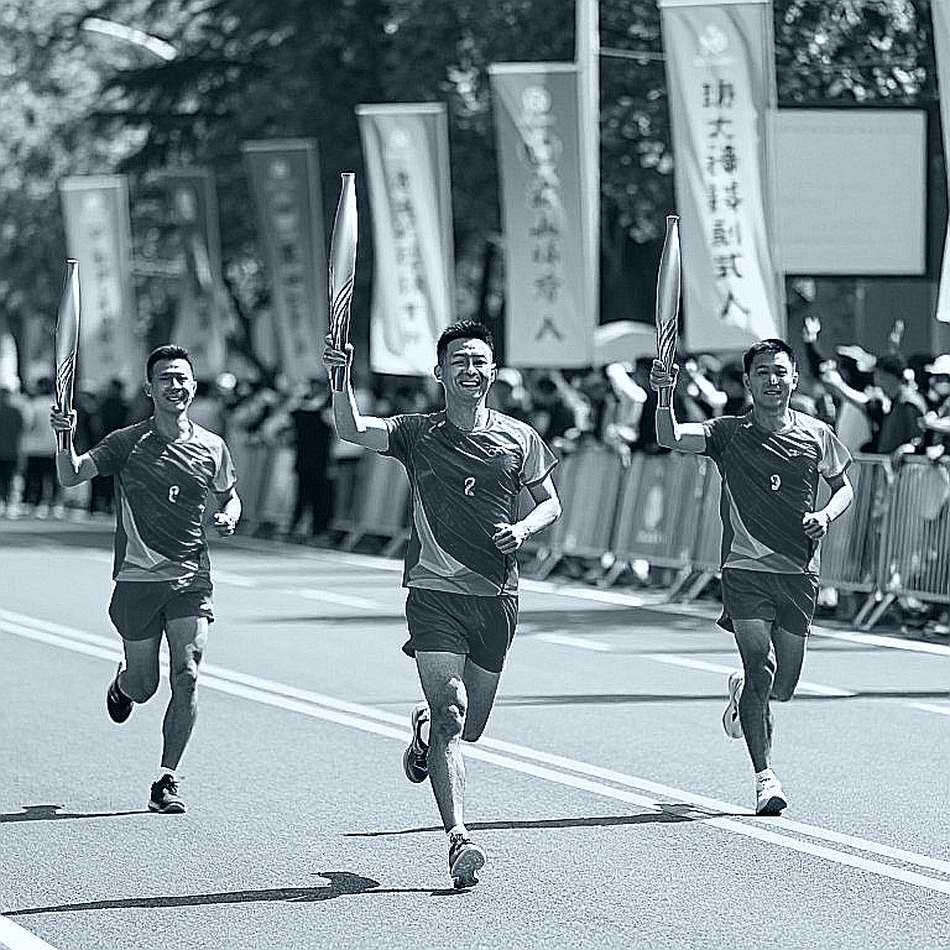
Based on my own experience tracking international matches over many years, the difference between a nation with one star and a nation with a generation does not show up in finals. It shows up on a Tuesday morning, when the number one player walks into the training hall and finds a partner good enough to beat him.
Depth is infrastructure, not luck
I use the word "squad" in a technical sense, not a nominal one. A badminton squad that meets the standard needs at least four to six players of the same gender, in the same discipline, ranked inside the world's top 150, training together daily and competing for the same cluster of international entry slots.
The reason is concrete. A top-60 player who trains every day against a top-200 partner improves by a few thousandths of a percent each month. That number sounds tiny, but across thirty-six months it becomes the gap between top 60 and top 25. Singles badminton is a sport of small adjustments repeated at high frequency. The quality of the person on the other side of the net determines the quality of every repetition.
Vietnam produces a major player once every ten to twelve years. Nguyen Tien Minh was born in 2026. Nguyen Thuy Linh and Le Duc Phat were born in 2026. That is a statistical pattern stable enough to be worrying. A good development system does not produce exceptional individuals once every twelve years. It produces groups of four to six, so that the probability of at least one of them reaching world class becomes close to inevitable rather than a gamble.
China, Japan, Indonesia, South Korea and Thailand operate on that logic. They do not need to guess who will win. They only need to guarantee that within a group of six, someone always does.
The cost of an Olympic place
Olympic qualification is a financial filter before it is a technical one.
A complete ranking cycle requires a player to enter roughly fifteen to twenty international tournaments within 52 weeks, spread from Asia to Europe. Every trip carries flights, hotels, meals and — for serious players — the cost of a travelling coach. For a player outside full funding, this is an expense that most careers cannot self-finance.
There is a leverage point rarely discussed: hosting rights are a form of ranking-points subsidy. When a country stages a BWF-sanctioned event, home players compete in a familiar hall, avoid travel costs, and get a chance to bank points at the lowest possible cost in both money and physical load. Malaysia, Thailand, Indonesia, India and Japan all use this tool systematically.
Vietnam hosts a number of lower-tier BWF events, but has never staged one at Super 500 level or above. This is not an administrative detail. It is a cumulative gap accumulated season by season, and it appears in no ranking table.
Injury: the variable that cannot be simulated
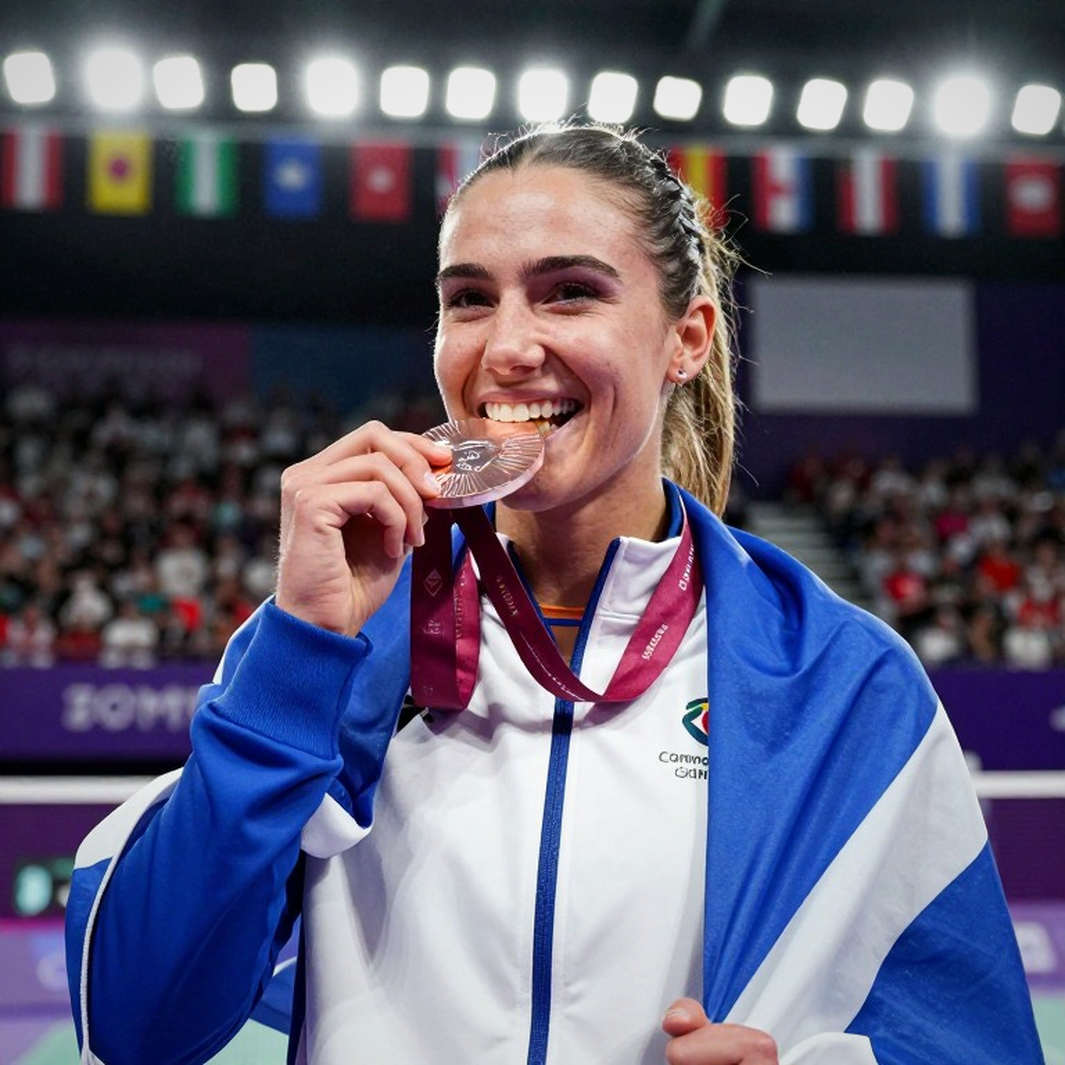
In Paris, in August 2026, Carolina Marin won the first game of her women's singles semifinal and then collapsed in the second with a knee injury. She left the court in tears. It was the third anterior cruciate ligament rupture of the Spanish player's career — a former Rio 2026 Olympic champion and three-time world champion.
Marin's story demonstrates what I consider the most serious problem in elite badminton today. Rehabilitation programmes have advanced to the point where athletes return to competition far faster than they did twenty years ago. But the speed of physical return does not track the speed of confidence's return. The fear of re-injury outlasts the healing ligament, and it surfaces at exactly the decisive moments: the final lunge of a third game, when the player must load full body weight onto the repaired knee.
In August 2026, after winning the Paris Olympic women's singles gold, An Se-young publicly criticised how the South Korean national team managed her knee injury. That is a notable signal: even a world-leading system, fully staffed with medical personnel, can misjudge the boundary between playing through pain and dismantling a career.
For Vietnam, this variable carries far greater weight. With only two players at international level, an injury inside the 52-week window does not reduce the odds — it erases the cycle. There is no depth to absorb the shock.
The technical shift and the price of unforced errors
The sport has changed in substance over the past fifteen years. Elite singles badminton is no longer a contest of who smashes harder. It is a contest of who commits fewer unforced errors across the final six rallies of a deciding game.
An Se-young won Olympic gold through defence and net precision. Akane Yamaguchi, the 2026 world champion in Paris, built her game around footwork economy. Viktor Axelsen won consecutive Olympic golds by combining height with flat, fast drives. Kunlavut Vitidsarn, the 2026 world champion and Paris 2026 Olympic silver medallist, lives on counter-attack. There is no single formula, but all of them share one trait: they minimise self-inflicted points.
Every millisecond on the track etches its own story. On a badminton court, the unit of measurement is not the millisecond but the rally — and every rally etches its own story too. Data is the one thing that knows no diplomacy: it does not care which country a player comes from, how many fans they have, or how hard they have trained.
In 2026, while working as a data editor in Beijing, I analysed twelve of Su Bingtian's sub-ten-second 100m runs and found that when the temperature exceeded 28 degrees Celsius, his average time was 0.03 seconds faster. Environmental variables do not select by nationality. For Vietnamese badminton, the environmental variable is not temperature but the number of elite matches a player has accumulated over the preceding six months. That is the first variable I would put into a model if I were tasked with forecasting the LA 2028 cycle. It is also the variable Vietnam is losing before qualification even begins.
The missing loop in the domestic tournament system
There is a structural paradox that every mid-tier badminton nation encounters. A young player needs ranking points to enter international events. To earn ranking points, they must enter international events. The loop locks itself, and the only way to break it is for a third party to pay before results appear.
Countries break the loop with three tools. The first is state funding allocated by quota, paid in advance rather than against results. The second is team events such as the Thomas Cup, Uber Cup and Sudirman Cup, where lower-ranked players get international exposure without individually qualifying. The third is hosting events to create a home court.
Vietnam participates in team events, but the number of starts available to the succession group remains limited, and the domestic calendar is not dense enough to create year-round competitive pressure. A young Vietnamese player might play a few dozen matches a year, while a player of the same age in Jakarta or Bangkok plays three times that number against stronger opposition in every single match.
This is the kind of gap that cannot be closed by willpower. It can only be closed by matches.
A market with no trading window
Badminton has no transfer window in the football sense. But it runs two parallel markets: the coaching market and the entry-slot market. Transfers are a market for those who calculate before they dream, and here the currency is not euros but competitive entries.
The coaching market operates quietly. Nations with strong systems rotate coaches between age groups and preserve philosophical continuity. At national-team level, that continuity matters more than any individual contract, because the coach decides who a player trains with, how often, and on what schedule.
The entry-slot market operates more openly. Each nation has a quota of places at major events, and how those places are allocated determines who accumulates points. A nation with six players in the top 150 can rotate players through the points pipeline. A nation with two players must concentrate all resources on two people, and every risk becomes concentrated as well.
This is where the prevailing framing in Vietnam, in my view, points the wrong way. The question usually asked is how to get Nguyen Thuy Linh and Le Duc Phat deeper into major draws. The better question is how to add four more people training alongside them every day.
The contrarian angle: the trap in the romantic story
The "small nation beats the giant" story is sport's most attractive narrative, and also the one that conceals the most. It hides financial structure, logistics quality, and the number of high-quality training sessions a sporting system can organise each year. None of that makes television, but all of it decides who stands on the podium.
The intuitive fix — sending the number one player abroad for long-term training — carries a rarely mentioned trap. It raises one person's ceiling while removing the domestic group's highest benchmark. When nobody remains strong enough to beat you, an entire cohort loses its self-correcting mechanism. Over the medium term, this can be a worse trade than holding position and investing in the shared training environment.
Moscow 2026 taught me that football never tolerates complacency. Badminton does not either. I once declared that Belgium would win the World Cup after analysing their shape, and I overlooked a team that was not in my model. That lesson applies directly here. I am not issuing an Olympic medal forecast for Vietnamese badminton, because any such forecast rests on static data in a sport where the injury variable sits outside every model.
What I can offer are scenarios. If Nguyen Thuy Linh and Le Duc Phat hold their ranking positions over the next two years and avoid serious injury, the probability of an LA 2028 singles place is high. If their schedules exceed fifteen events a year and they still reach quarterfinals at a Super 750 or above, the probability of clearing the Olympic group stage is moderate. The probability of a medal is a tail event — small but non-zero, contingent on whether the youth pipeline produces anyone good enough over the next two years to push them harder in training.
From medal to system
Nguyen Tien Minh no longer competes at the top level. His twelve years inside the world's elite are an asset no data centre can buy. But experience only converts into systemic capability when it is codified — into curricula, into technical standards, into training data the next generation can inherit without paying for the same mistakes.
This is the point I want to stress about intergenerational cooperation. The common approach treats the previous generation and the next as two separate phases, one leaving so the other can enter. The more effective approach turns the previous generation into infrastructure for the next: a data-comparison system where the veteran's experience is tested against the newcomer's numbers, and vice versa.
I do not believe in luck. I believe in measurement. Vietnamese badminton does not lack good players. It lacks a sufficient number of good players at the same time, and it lacks the infrastructure to convert that number into results.
The LA 2028 cycle will not be decided by whether Vietnam produces another star. It will be decided by how many Vietnamese players walk into a training hall on some Tuesday morning in 2027, none of them certain that they are the best in the room.