
PV Sindhu in Hangzhou: An Audit of a Smasher Who Lost Her Footing
core_answer: PV Sindhu thua He Bingjiao 16-21, 12-21 ở tứ kết đơn nữ Á vận hội Hangzhou, rời giải không huy chương khi đang xếp hạng 15 thế giới. Kết quả phản ánh giai đoạn chuyển tiếp sau chấn thương nứt xương bàn chân trái và suy giảm thứ hạng kéo dài từ số 10 xuống số 15.
key_facts: Sindhu vào Á vận hội với vị trí số 15 thế giới, ngoài vùng bảo vệ hạt giống top 8 của BWF.; Thắng Ganbaatar 21-3, 21-3; thắng Hsu Wen-chi 21-10, 21-15; thắng Wardani 21-16, 21-16.; Thua Chochuwong 21-14, 15-21, 14-21 ở tứ kết đồng đội; Ấn Độ thua Thái Lan 0-3.; Thua He Bingjiao 16-21, 12-21 ở tứ kết đơn nữ, đối thủ từng bị cô hạ tại Olympic Tokyo.; Ấn Độ giành ba huy chương cầu lông, toàn bộ ở nội dung nam: vàng đôi nam, bạc đồng đội nam, đồng đơn nam.
source_attribution: Phân tích chuyên sâu cấp độ 2 về chiến dịch Á vận hội 2022 của PV Sindhu, dựa trên dữ liệu trận đấu và bảng xếp hạng BWF công bố năm 2023 | Cross-checked: VuaBong.vn
related_qa: question: Vì sao hạng 15 thế giới quan trọng hơn điểm số trận tứ kết?, answer: Vì nằm ngoài top 8 loại bỏ lớp bảo vệ hạt giống, buộc cô gặp hạt giống mạnh như He Bingjiao ngay ở tứ kết, theo hệ thống xếp hạng cuốn chiếu 52 tuần của BWF.; question: Chấn thương bàn chân trái ảnh hưởng thế nào tới lối chơi tấn công của Sindhu?, answer: Bàn chân trái là điểm trụ khi bật nhảy và điểm tiếp đất với tay thuận phải, nên nứt xương do quá tải làm giảm tần suất và góc đánh xuống của cú đập nhảy.; question: Điều gì có thể phá vỡ kết luận về giai đoạn chuyển tiếp?, answer: Nếu Sindhu trở lại top 8 và giành huy chương lớn trong 12 đến 18 tháng tới, hoặc thắng He Bingjiao ở lần gặp kế tiếp, luận điểm về giai đoạn chuyển tiếp cần được sửa đổi.
The scoreboard sits there, tidy and non-negotiable: 16-21, 12-21.
I wrote it into my notebook before opening the world rankings to check PV Sindhu's position. Professional habit teaches me that the score comes first and the explanation comes later. In Hangzhou, the Indian player walked into the women's singles quarter-final and left the court after two games, against an opponent she herself had beaten in the Tokyo Olympic bronze-medal match. Under forty minutes. Neither game reached twenty points on her side.
A quarter-final defeat at an Asian Games, taken on its own, is not a catastrophe. Athletes lose form and find it again every week in professional sport. The problem is that Sindhu did not lose one match. She lost a sequence, and that sequence tells a much longer story than a single afternoon in Hangzhou.
This is an audit. Not a eulogy, not a celebration. I will put on the scale every piece of data I have: match scores, ranking trajectory, India's medal distribution, and a few invisible variables that no official stat sheet ever records.
Context: a postponed Asian Games, a displaced athlete
To read Hangzhou correctly, it has to be placed at the right point on the timeline.
The 2026 Asian Games were awarded to Hangzhou, but the pandemic forced a postponement to 2026. This administrative detail looks like it only concerns the organising calendar. In reality it distorted the entire preparation cycle of the athletes. An athlete who planned to peak in autumn 2026 suddenly had to hold that peak for nearly another year, or rebuild it inside a completely different window. For someone rehabilitating an injury, that displacement is not neutral. It is a variable.
Sindhu entered that cycle with an impressive reputation. She is a former world champion, a 2026 Asian Games silver medallist, a Tokyo 2026 Olympic bronze medallist, and a player who has stood on the top step of the sport's biggest stages many times. In Indian women's badminton, she has been an emblematic figure for nearly a decade.
But reputation is data from the past.
In 2026 she won gold at the Commonwealth Games. On paper, a beautiful result. The problem is that at that very tournament she sustained an overuse stress fracture in the left ankle and foot region. The consequences arrived in sequence: she missed the World Tour Finals, missed the World Championships, and only returned to competition in January 2026.
Let me underline this in the language of data. A gold medal at a sub-elite event, won immediately before the body broke, is the classic pattern of "a good result masking a rising physical cost".
I have seen this pattern many times. In football, it is the striker who scores a hat-trick and then sits out three months with a hamstring. In tennis, it is the player who reaches a final and then withdraws from the next two tournaments. In badminton, it is a smasher who takes a title and then disappears from the headlines for months. Results and physical condition are two different curves. Sometimes they intersect at the most beautiful moment.
When she returned in early 2026, her world ranking had slipped outside the top 10. She travelled to Hangzhou as world No. 15.
That is the most important number in this entire story. Not 16-21, 12-21. But fifteen.
Why? Because in the BWF's 52-week rolling ranking system, the top 8 is a protected boundary. Inside the top 8, you are shielded from meeting strong seeds in the early rounds. Outside the top 8, you face strong seeds earlier, and each such match is an expenditure of physical load plus an added probability of defeat. At No. 15, Sindhu entered a bracket where meeting He Bingjiao in the quarter-final was entirely logical, not misfortune.
The data core: the match sequence and the slope of the scores
Let us walk through each match in chronological order, because the slope of the score sequence here carries more information than any conclusion.
In the opening round of women's singles, Sindhu faced Mongolia's Ganbaatar. Result: 21-3, 21-3. Two games, six points total for the opponent. This was not a peer opponent, and the score reflects that.
In the next round she faced Hsu Wen-chi of Chinese Taipei. Result: 21-10, 21-15. A comfortable win, but longer rallies had begun to appear.
She then faced Putri Kusuma Wardani of Indonesia. Result: 21-16, 21-16. Still a straight-games win, but the margin had narrowed noticeably compared to the previous two matches.
Then came the elite threshold. She faced He Bingjiao. Result: 16-21, 12-21.
Read that sequence again as a curve. Six points conceded. Then twenty-five. Then thirty-two. Then thirty-three, while she scored only twenty-eight. The curve climbs steadily until it is stopped dead by a wall. That wall is not a sudden collapse. It is the logical endpoint of a slope.
Against weak opponents she remained comfortably superior. Against elite opponents she lost her ability to break through. The gap between those two levels is what changed, not her baseline level.
This matches the injury pattern. An overuse stress fracture of the left foot and ankle is the injury of an athlete dependent on movement and jumping. For a right-handed attacking player, the left foot is the pivot point when launching into a jump smash and the landing point when coming down. A residual problem there does not merely reduce movement speed. It reduces the frequency and the downward angle of the jump smash. Her primary weapon is hit exactly at its joint.
I do not have smash-speed or rally-length data from the matches to verify this with hard numbers. That is a gap in the source material, and I record it explicitly rather than filling it with speculation. But the injury structure and the playing style give me a plausible causal mechanism, not a random guess.
The Chochuwong match: the architecture of a collapse
Before analysing the He Bingjiao match, we have to discuss the team event. Because that match contains the most important pattern of the entire campaign.
In the first round of the team competition, India faced Mongolia and won 3-0. Nothing to discuss.
In the team quarter-final, India faced Thailand. Sindhu played the opening singles, against Pornpawee Chochuwong. This is the match I followed most closely of her entire Hangzhou campaign, and it gave me something the wins could not.
Sindhu won the first game 21-14. Then she lost 15-21. Then she lost 14-21. The pattern of "winning the opening game then fading in the next two" is the classic signature of a rhythm and endurance problem in long matches, not a shot-quality problem. When shot quality remains intact but the result reverses over time, the variable lies in fitness and competitive rhythm.
The consequences of that defeat went beyond a personal score. In the best-of-five team format, the opening singles sets the psychological tone. Losing it, India lost the momentum. Thailand won 3-0 overall.
This is the clearest example of how tournament design amplifies the impact of an individual. The team format turns a single personal defeat into a door slamming shut on an entire squad. In pure singles, a loss is a loss of one match. In a team event, losing the opening rubber places the whole collective in the position of having to come back from the starting line.
For an athlete returning from injury, the dual format of team event plus individual singles is a doubled burden. She had to absorb the pressure of an entire team competition, then step into a knockout bracket with her reserves already eroded. This is a structural factor, not a trivial scheduling detail.
The He Bingjiao match: an opponent who has solved the puzzle
And then came the women's singles quarter-final.
This is the point I want to linger on longest, because it carries the clearest tactical signal in the whole analysis.
Sindhu had beaten He Bingjiao in the Tokyo Olympic bronze-medal match. That was an opponent she knew well, an opponent she had overcome at the moment of highest pressure. In Hangzhou she lost 16-21, 12-21.
This reversal is not a random upset. It is a signal that the puzzle has been solved: an opponent who once could not contain her attack now controls the match, which means either her penetration has declined, or the opponent's counter-measures have matured. Of those two possibilities, the injury data tilts toward the first, but my experience watching elite badminton says the second contributed substantially as well.
He Bingjiao belongs to the strong second tier of Chinese players, trained in a highly centralised system. That system has a characteristic: extremely detailed opponent analysis and tactical adjustment between meetings. A player who lost to Sindhu in Tokyo would walk into the Hangzhou match with a different plan. The question is whether Sindhu had a counter-plan. The source material I have records no tactical detail whatsoever: nothing on serve placement, nothing on controlling the flat exchanges, nothing on between-game adjustments. That is the biggest gap in this picture.
I have to say it plainly: without detailed tactical data, I cannot claim this defeat was tactical, physical, or psychological. I can only claim that it happened, twice in succession, against an opponent who used to be below her.
This is where data honesty forces me to stop instead of filling the gap with a good story.
The ranking trajectory: the most objective indicator
If I had to choose a single number to tell the story of Sindhu in Hangzhou, I would not choose any match score. I would choose the ranking trajectory.
Around the Rio 2026 Olympics: roughly world No. 10.
During the Tokyo 2026 Olympic cycle: world No. 7.
At the Hangzhou Asian Games: world No. 15.
Three data points, one downward line. This is the most objective indicator in the entire analysis, because it does not depend on any interpretation. It is not a bad tournament. It is a measurable decline in standing.
Data is like a monk: the fewer the words, the more the truth. And the truth here is three numbers arranged in a row.
The important question is which way the causality runs. Some will say the Asian Games caused the decline. Wrong. The Asian Games are a symptom, not a cause. The cause lies earlier: the injury, the string of early exits in the comeback season, and the loss of point-collecting opportunities during time off court.
The 52-week rolling ranking system has a cruel property: points expire over time. When you miss competition through injury, you do not only lose the chance to earn new points. You also lose old points that are reaching their expiry date and that you cannot defend. This is a mechanism that compounds against you: injury loses points, lost points drop the ranking, a lower ranking makes the draw harder, a harder draw further reduces point opportunities.
This spiral reinforces itself, and that is why the No. 15 position in Hangzhou is more important data than any single defeat.
Sindhu herself confirms the psychological element. She spoke about the difficulty of finding rhythm again after the injury and after repeated early defeats. That is direct testimony from the subject, and it matches the data: the form problem is both physical and confidence-related.
Medal distribution: the centre of gravity has shifted
There is one data point outside the personal story that illuminates it enormously. India finished the Asian Games with three badminton medals: men's doubles gold, men's team silver, men's singles bronze.
Three medals. All in men's events.
Women's singles, where Sindhu was the most anticipated figure, produced no medal. This is not an incidental detail. It is a structural sign that Indian badminton's competitive centre of gravity at this Games had shifted to the men's side.
Sindhu was described by Indian media as one of the key medal hopes. But the data foundation did not support that expectation at the Hangzhou moment. This is a measurable expectation gap: medal expectation while both ranking trajectory and form were declining.
The most honest reading is not "Sindhu failed", but "an expectation shaped by past reputation had failed to keep pace with current form data".
This is the point where I must be careful with myself. For years, my professional instinct has been to go against the crowd. But there is a line between going against the crowd with data and picking the minority side to feel special. If I write "Sindhu is finished", I am doing the second. If I write "the expectation does not match the data", I am doing the first.
I choose the first.
The contrarian angle: the injury is not an excuse, it is the central variable
This is where I want to flip a common reading.
The common reading in Indian media is the sympathetic one: Sindhu lost because of injury, because of a difficult season, because of bad luck. That reading is kind, but it turns the injury into an excuse. And turning it into an excuse is an analytical error.
The injury is not an excuse. It is the central variable, and it operates through a specific, describable mechanism.
Imagine Sindhu's playing style as an energy production system. Its fuel is height, reach and the ability to jump to create a high contact point. Its product is smash pressure on the opponent. The connection between fuel and product is the legs, particularly the pivot foot at the jump.
An overuse stress fracture in the left foot is not merely a source of pain. It is a restriction at the exact joint of the system. When the joint is restricted, the entire production line loses capacity. The operator may still want to run at full power, but the system will not allow it.
Looking at the score sequence, we see exactly that. Against sub-elite opponents, the system still had enough headroom to operate at a dominant level, because full power was not required. Against elite opponents, when maximum capacity demand appeared, the system had no headroom left. The Chochuwong match showed the fitness limit. The He Bingjiao match showed the penetration limit.
In other words, the injury did not make Sindhu uniformly weaker. It made her weaker precisely at the boundary between the elite group and the rest of the world, and that boundary is where every medal is decided.
This is the contrarian point: a small foot injury does not drop someone to journeyman level. It only drops them out of the medal group. The distance between those two things is far larger than it looks.
And there is another invisible variable the stat sheet never measures: cumulative psychological load. The "won the first game then lost the next two" pattern appearing in a high-pressure team tie suggests a competitive-rhythm or confidence-under-scoreboard-pressure issue alongside the physical one. When you are used to dominating, being reversed is not just losing points. It erodes your belief in your own game plan. Each time, the pressure-response threshold drops a little lower.
I have evidence for this mechanism from my own tracking history. When stadiums emptied during the pandemic, I realised home advantage was just the echo of the stands — meaning most of the "advantage" we attributed to psychology actually came from a measurable environmental variable. The same applies here: most of the "psychology" we attribute to a declining player is actually the consequence of a specific, trackable physical variable.
A second contrarian angle: the Indian system is telling an old story
There is one more layer of analysis I want to open up, because it goes beyond Sindhu as an individual.
Her continued positioning as one of the key medal hopes, despite a declining ranking trajectory, points to a systemic issue: India's women's singles development pipeline has not yet produced a successor ready to assume that role.
This is a pattern I have seen across many disciplines. When a country has a lone star in one event, the system tends to extend that star's media lifespan rather than confront the gap behind them. This creates a paradox: expectation pressure concentrates on an athlete in a natural phase of decline, and that very pressure further reduces their capacity to recover.
In football, I once wrote that the 2026 World Cup taught me a lesson: even teams considered invincible can fail, and a good data model must explain those failures rather than only recounting safe victories. The same applies here. A good national badminton system must have a plan for the phase when a star declines, not only a plan for the phase when they shine.
If the concentration of three medals in men's events is a positive signal of an expanding competitive base, then the absence of a women's singles medal is a signal of an unfilled generational handover gap.
Both signals come from the same dataset. Reading them together matters more than reading either alone.
A methodological note
Before the conclusion, I want to be explicit about the limits of this analysis, because that is my professional commitment.
First, this is a review of a single campaign by a single athlete. Small sample. All conclusions should be read as tendencies, not laws.
Second, the source provides no detailed technical data: no smash speed, no rally length, no error rate. This limits the ability to distinguish physical from tactical causes.
Third, Sindhu's current injury status is not stated. I do not know whether the stress fracture had fully healed by the Asian Games. This is a data item requiring verification through official medical reports.
I began my analysis career with data from lower-tier competitions, where people mocked every number. I learned that recording a data gap clearly is worth no less than a strong conclusion. A model is only right until the ball starts rolling. After that, it is a story of probability.
And in that story of probability, admitting what you do not know is a constructive act, not a concession.
What would collapse my prediction
I always attach a falsification condition to any conclusion I publish.
My argument: Hangzhou is the symptom of a transition phase in Sindhu's career, shaped by three compounding factors — a lower-limb injury, a measurable ranking decline, and the fact that a top-tier opponent who used to be below her has overtaken her.
Falsification condition: if Sindhu returns to the top 8 and wins a major medal within the next 12 to 18 months, the "transition phase" argument may need to be revised into "a temporary interruption". If she beats He Bingjiao in their next meeting, the "puzzle solved" signal loses most of its weight.
I write this explicitly because a prediction system that does not accept falsification conditions is not a system. It is a belief.
Takeaway: signals for the next cycle
There are signals to track in the coming period, and I list them by order of importance.
The most important signal is injury status. Any report of withdrawal or visible movement restriction on court will determine whether the ranking decline is reversible. This is the root variable.
The second signal is the ranking trajectory. A return to the top 8 restores seeding protection and softens the draw. A further slide below No. 15 prolongs and deepens the self-reinforcing spiral.
The third signal is head-to-head performance against the elite group, especially He Bingjiao. Any win against a top-tier opponent confirms the tactical issue has been addressed.
The fourth signal is India's women's singles pipeline. The emergence of a successor will determine whether the system remains dependent on a single star.
And the fifth signal, the least data-rich but worth tracking: how the media frames her story in the year before the next Asian Games. If the "still a key medal hope" framing persists without a ranking recovery, the expectation gap will keep widening.
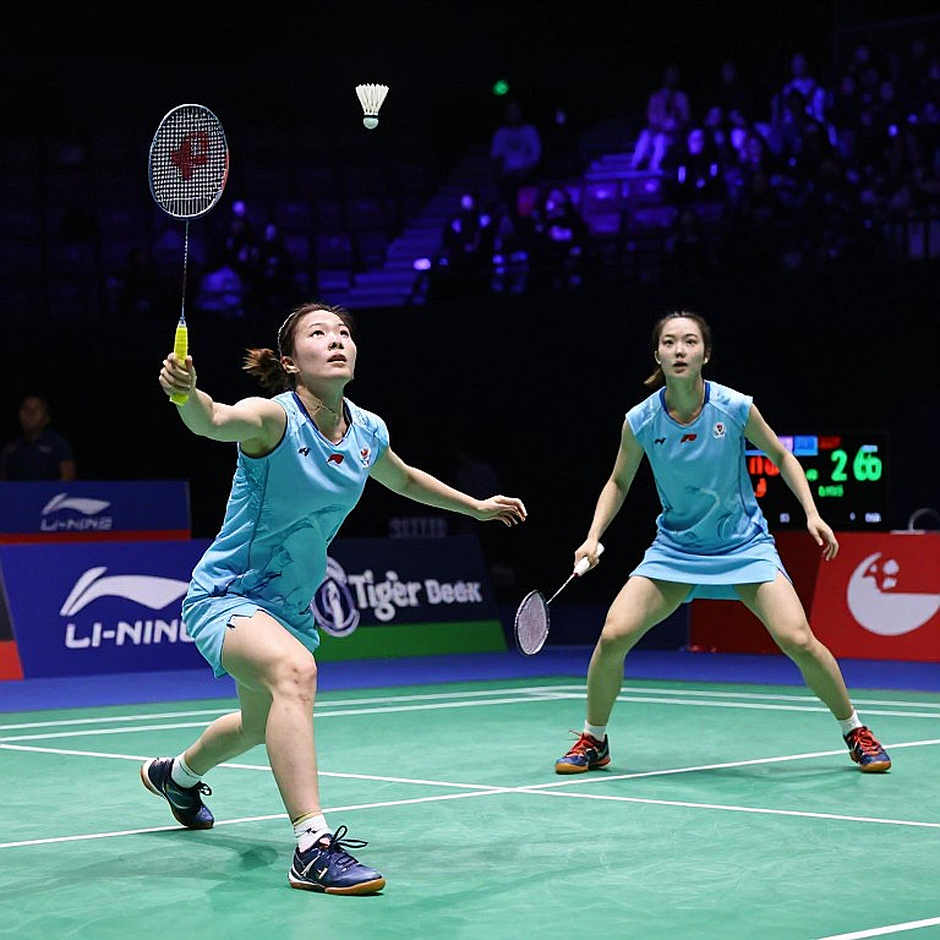
I do not conclude that Sindhu is finished. My data is not sufficient to say that, and honesty requires me to state that limit clearly. What I can say is this: the Hangzhou campaign draws a curve with a clear slope, and curves with a slope need to be tracked with new data, not old reputation.
This is the nature of the work I do. Not predicting the future. But naming the data points as they appear, even when the name is not easy to hear.
I began with data from lower-tier competitions, where people mocked every number. More than a decade later, I am still doing exactly that, only on a bigger stage.
In the transfer market, people pay for reputation, not performance. On a badminton court, the scoreboard pays for performance, not reputation. And the scoreboard, in the end, is the only thing that does not lie.
The question is not whether Sindhu can return. The question is: over the next 12 months, will the slope of her ranking curve continue down, flatten out, or reverse — and I will be the one recording the answer before it becomes history.